#49 Media Workflow Basics: Part 2 of 5: Media Storage

In this second installment of the Media and Entertainment Digital Workflow Series, Jason and Ben discuss storage. They cover the inner workings of, and the differences between the most common storage technologies we use in media and entertainment workflows. Meant as a breakdown and comparison of these technologies, the hosts review the importance of file systems and their associated metadata, block and file level storage, and safety considerations in maintaining high performance systems.

For a deeper view on this topic, make sure to check out the first episode of this series on Ingest of media and video, along with The Workflow Show episode on SAN vs NAS and the episode on File Systems.

We want to give another thank you to SVG for featuring The Workflow Show. You can check out that article here.

We’d love to hear more from you, our listeners. Send topic suggestions, questions on the series, and share how you found our podcast at workflowshow@chesa.com

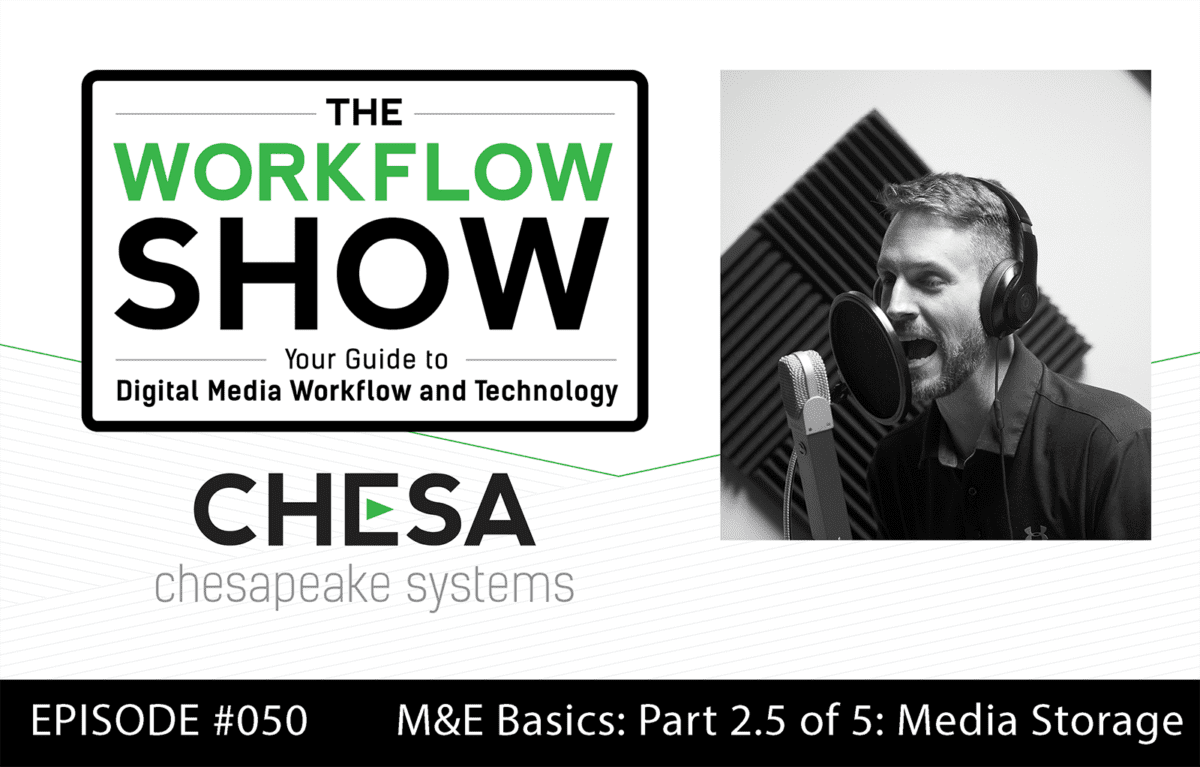
#50 Media Workflow Basics : Part 2.5 of 5 Media Storage

In this second half of the second installment, or part two of part two, of the Media and Entertainment Digital Workflow Series, Jason and Ben continue their discussion of storage. They explore erasure coding, what differentiates it from traditional RAID, and what it’s advantages and disadvantages are for M&E workflows. Additionally, they talk through storage tiering concepts, business continuity plans, and provide examples of sizing a shared storage volume for an organizations aggregate bandwidth needs.

#51 Workflow In the Cloud – Creativity Drives Innovation – A Talk with Michael Cioni of Frame.io

For this episode of The Workflow Show, we’re delighted to have guest Michael Cioni, Global SVP of Innovation at Frame.io, as our guest. Jason and Ben ask specifically what it means to lead innovation, what’s next for Media IT and post-production in film, and how to inspire creative teams with UI and editing tools. Michael presents the benefits of editing video in the cloud and camera to cloud versus traditional workflows and how Frame.io completely changes the workflow of review and approval. They discuss the art of being uncomfortable in order to learn and adapt to changes in the Media and Entertainment industry, as well as managing the hurdles of new innovations as the business comes to eventually adopt the newest tools. Michael explains the problems of deletion among content creators and how to plan an archive and MAM around the needs of exponentially expanding file sizes and equipment specs.

#52 Creativity Driving Innovation, a talk with Michael Cioni

In the second half of our interview with Micheal Cioni of Frame.io, Ben and Jason ask Michael about his background and the sights he saw in filmmaking along the way. They discuss Micheal’s trip to be featured at Cannes, despite his college’s wishes. Micheal details the lessons he’s learned from mentors about adapting to changing tech and looking for innovation in an industry that can be slow to change its tools. Finally, Jason and Ben explore with Micheal what the creative contributes to the building and designing of workflows, in order to make editors and filmmakers excited about their process.

#53 Shared NVMe Storage, Object Storage, and the Future of StorNext, with Eric Bassier

CHESA’s Ben and Jason chat with Eric Bassier, Senior Director of Product and Technical Marketing at Quantum. Ben and Jason ask Eric about the future of storage systems in and out of the cloud, and what changes within Quantum’s products are helping businesses adapt their workflow to the current climate of on-prem, cloud, and hybrid systems. Eric details the benefits and use cases of NVMe and how companies are migrating to it.
  • Storage and Networking Technologies behind StorNext from Quantum
  • Talk about Hybrid Cloud and File Systems entirely in the Cloud
  • Cover use cases for Block Storage vs Object Storage, NVME vs SSD
  • Talk innovations in the future for Cloud Level Storage and changes to the industry from these technologies

More From CHESA on NVMe:

For more on NVMe read Ben Kilburg’s blog Is NVMe Right for You Right Now?

#59 Video Production and Post Production in the Cloud During Covid with Michael Kammes of Bebop Technology, Part 2

On this episode of The Workflow Show we continue a great conversation with Michael Kammes of Bebop Technology. Along with discussing production and post production in the cloud and how different teams are assessing the types of workstations they can collaborate from, Ben and Jason of CHESA ask about internet bandwidth and other end-user requirements and limitations in cloud production workflows. They also discuss how changes in new technology and hardware, such as Apple’s ARM chip, could change cloud workflow.

#58 Video Production and Post Production in the Cloud During Covid with Michael Kammes of Bebop Technology, Part 1

On this first of our two-part episode of The Workflow Show “Video Production and Post Production in the Cloud During Covid” with Michael Kammes of Bebop Technology, Jason and Ben of CHESA speak with returning guest Michael Kammes, Director of Business Development at Bebop Technology. It’s been a year (Pre-Covid) since Michael’s last guest appearance. Much has changed since our last chat when we discussed editing in the cloud. Quickly this has become the norm. Catch up with Jason, Ben, and Michael to hear what has changed in the last year and what video editors and studios are looking for as they adapt workflows to an at home and remote creative workforce.

What is the difference in requests of clients and customers from a year ago to now, including facility changes, moving assets to the cloud, and vetting out the right tool for each team’s need?
What has Post Production in the Cloud during Covid looked like?
Why low cost solutions to cloud file management can be enticing, but sometimes don’t fit the overall needs of customers.
How should you consider a cloud strategy for your team?
What are the different methodologies of collaborative editing in the cloud?

#57 Scaling Out Workflows; Audio Production vs. Video Production with Ben Meadors, Post Production Engineer, Spotify Studios

On this episode of The Workflow Show, Jason and Ben speak with Ben Meadors, Post Production Engineer at Spotify Studios about the differences between a video production workflow and an audio production workflow. Ben covers the processes of Spotify and where the production team has grown. Ben Meadors shares the thorough, detailed documentation at Spotify that enables the teams in their onboarding and in troubleshooting. Tune in for some highly useful first-hand experience.

#56 Engineering Empathy: Building Innovative Access Systems and Preserving Video Testimony with Sam Gustman, CTO and Associate Dean at USC Shoah Foundation and USC Libraries

On this episode of The Workflow Show, hosts Ben and Jason interview Sam Gustman, CTO of USC Shoah Foundation – The Institute for Visual History and Education (USC Shoah Foundation) and Associate Dean and CTO at the USC Libraries where he oversees IT for the Libraries and started USC Digital Repository (a CHESA client). Their discussion covers the intricacies of maintaining a media archive to last for generations, including file management and migration, avoiding bit rot, preservation quality video codecs, and the Dimensions in Testimony project which uses AI to allow people to have a real-time conversation with Holocaust survivors and other witnesses to genocide. Sam Gustman also elaborates on the origination of the Shoah Foundation and the important work they do for education, highlighting the voices of genocide survivors and leveraging technology to engender respect and understanding.

#55 Creative Journeys: Surprise! You Work in IT Now

Feeling the Pain of Being Out of Your Technical Depth? Don’t Suffer in Silence – CHESA’s got a Workflow Therapy couch ready for you. Take heart from your CHESA friends’ struggles with “Imposter Syndrome”- and tactics to overcome it! – throughout their careers. CHESA Business Development rep Louise Shideler returns to chat with hosts, Ben Kilburg and Jason Whetstone, about their journeys from the creative realm into the technical domain of Media IT. They share similarities along their paths and suggest characteristics, attitudes, and habits that anyone working in Media and Entertainment technologies can apply.

  • How do skills from traditional “creative” fields transfer to Media IT roles?
  • The importance of critical problem-solving and analytical skills, as well as one’s mindset, for successfully managing such a career
  • How to find your mentors in the industry: communities that support continuing education, such as professional organizations and online forums & blogs
  • Why and how “Imposter Syndrome” affects those in this field — and even the customers who seek workflow consultation