
- Research & Analysis
Introduction
For centuries, the em dash has quietly served writers as one of the most expressive tools in punctuation—a simple line capable of interrupting thought, adding emphasis, or shifting tone mid-sentence. Born in the early days of typography and embraced by literary giants from Emily Dickinson to Virginia Woolf, the em dash has long been a hallmark of polished writing.
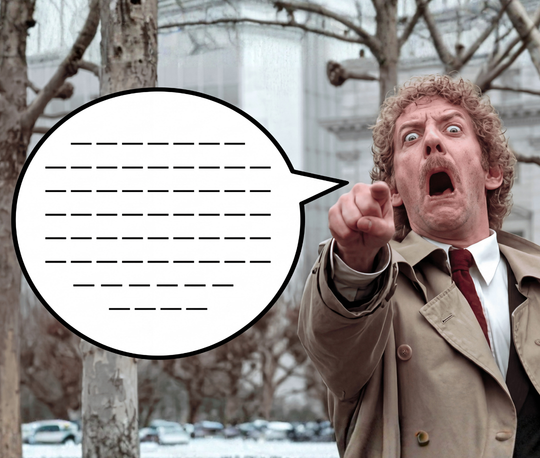
Yet in a curious twist of the modern digital age, this centuries-old punctuation mark has recently gained an unexpected reputation: some readers now see it as a sign that artificial intelligence may have written the text.
In an era suddenly obsessed with detecting machine-generated prose, even a piece of punctuation has become suspect.
This article explores the origins, evolution, and enduring usefulness of the em dash—along with the strange cultural moment that has turned a classic punctuation mark into an alleged AI fingerprint.
A Long Line Through History
There are few punctuation marks as quietly powerful as the em dash. It’s long, dramatic, and a little theatrical. It can interrupt a thought, insert a revelation, or punch up a sentence with sudden emphasis. For centuries, writers have used it as a stylistic flourish. Today, however, it has developed an entirely new—and somewhat strange—reputation: some readers now view it as a signal that a piece of writing might have been produced by artificial intelligence.
Which raises an odd question.
How did a piece of punctuation that predates the modern novel become associated with machine-generated text?
To understand that paradox, we need to go back several centuries—back to the birth of typography itself.
What Exactly Is an Em Dash?
An em dash (—) is the longest of the common horizontal punctuation marks. It is longer than both the hyphen (-) and the en dash (–).
The name comes from typography. In traditional typesetting, an “em” is a unit of measurement equal to the point size of the font being used. In 12-point type, for example, one em equals 12 points.
Historically, this measurement corresponded roughly to the width of a capital “M” in metal type, which is where the name originates.
That typographic origin is important. The em dash wasn’t invented by grammarians—it was invented by printers.
Hyphen vs En Dash vs Em Dash
These three marks are often confused, but they serve different functions.
| Mark | Symbol | Typical Use | Example |
| Hyphen | – | Connect compound words | well-known author |
| En dash | – | Show ranges or connections | 1998–2005 |
| Em dash | — | Interrupt or emphasize a sentence | She had only one option—run |
The Earliest Origins of the Dash
The conceptual ancestor of the modern dash dates back nearly a millennium.
One early precursor appears in the work of Boncompagno da Signa, an 11th-century Italian scholar who experimented with punctuation systems in medieval Latin manuscripts. His mark, called the virgula plana, resembled a long horizontal stroke similar to today’s em dash.
The mark’s early role was not stylistic—it was structural. Boncompagno used it as a flexible pause or separator within text.
However, the dash did not become widely standardized until much later.
The Dash Enters the Printing Age
When movable type printing spread across Europe in the 15th and 16th centuries, printers needed ways to represent pauses, interruptions, and rhetorical shifts in text.
By the early 1600s, long dashes began appearing in printed literature. Early examples appear in printed editions of Shakespeare’s plays, where they were used to signal interruptions in speech or sudden shifts in thought.
These early dashes were not standardized. Printers used different lengths and sometimes even composed them by stringing together multiple hyphens.
But the concept was there.
The dash had entered the written language.
The 18th Century: The Dash Finds Its Voice
If the dash had a literary champion, it would probably be Laurence Sterne, author of The Life and Opinions of Tristram Shandy, Gentleman (1759).
Sterne used dashes with wild enthusiasm. They appear throughout his novel, interrupting sentences, mimicking speech patterns, and creating dramatic pauses. His use of the dash helped legitimize it as a stylistic tool rather than merely a printer’s convenience.
The dash became a way to imitate thought itself—erratic, interrupted, and nonlinear.
Later writers embraced it as well:
- Emily Dickinson filled her poems with dashes.
- Victorian novelists used them for dramatic dialogue.
- Modernists like James Joyce experimented with dash-based dialogue formatting.
By the 19th century, the dash had firmly embedded itself in literary style.
Famous Writers Who Loved the Em Dash
The em dash has been embraced by some of literature’s most distinctive voices.
Emily Dickinson
Dickinson’s poetry is perhaps the most famous example of em dash usage. Her dashes create pauses, uncertainty, and rhythm that feel closer to spoken thought than structured grammar.
Example:
Because I could not stop for Death —
He kindly stopped for me —
Her use of dashes was so distinctive that editors later struggled to standardize her punctuation without altering the feel of her poetry.
Virginia Woolf
Woolf used dashes to reflect interior thought and shifting perspectives in stream-of-consciousness narration.
Example style:
She had the oddest feeling—that something had just slipped away.
The dash becomes a psychological pivot point in the sentence.
Kurt Vonnegut
Vonnegut often used the dash to inject conversational timing and humor into his prose.
Example style:
He was a perfectly good engineer—until someone asked him to manage people.
The dash functions almost like a comedic pause.
Herman Melville
In Moby-Dick, Melville frequently used dashes in dialogue and narration to create dramatic interruptions.
Example style:
“Look ye now,” said Queequeg—“what you say?”
How Editors and Style Guides Tamed the Dash
For all its expressive power, editors have long had a complicated relationship with the em dash.
Most major style guides eventually formalized its use.
The em dash is typically used to:
- Insert a parenthetical aside.
- Indicate an abrupt shift in thought.
- Replace commas, parentheses, or colons for emphasis.
- Introduce lists or summaries.
Example:
She had three priorities in life—family, curiosity, and good coffee.
Editorial styles vary slightly.
- Chicago Manual of Style recommends closed em dashes (no spaces).
- Associated Press style often prefers spaced dashes.
Despite these differences, the em dash remained a hallmark of polished editorial writing.
You would routinely find it in:
- Newspapers
- Literary fiction
- Magazine essays
- Academic prose
- Opinion columns
In other words, the em dash lived where edited writing lived.
Then the Typewriter Ruined Everything (Sort Of)
The 19th-century typewriter created an unexpected problem.
Most typewriters lacked dedicated keys for en dashes and em dashes. Writers were forced to approximate them using double hyphens (–). Over time, this convention carried into early word processors and digital writing systems.
Modern software eventually restored the true characters through auto-formatting.
But the em dash never quite regained its ubiquity in everyday writing.
Casual communication—emails, texting, social media—favored simpler punctuation.
And then something unexpected happened.
The Em Dash and the Rise of AI Writing
Around 2024 and 2025, an unusual cultural observation began circulating online.
Readers noticed that some AI-generated text—particularly text produced by ChatGPT—frequently used em dashes. Social media users jokingly referred to them as the “ChatGPT hyphen.”
The idea spread quickly:
“If a sentence contains an em dash, it must be AI.”
Of course, that claim is not actually true.
But it reflects a fascinating cultural shift.
Why AI Uses the Em Dash So Often
The explanation is surprisingly mundane.
Large language models are trained on enormous corpora of written text. Much of that text comes from sources such as:
- Books
- Journalism
- Essays
- Edited web content
These are precisely the environments where em dashes historically appear.
In other words, AI didn’t invent the em dash.
It simply learned from writers who were already using it.
Ironically, as everyday writing moved toward shorter, more conversational formats (texts, Slack messages, tweets), the em dash became less common in casual human communication. That created a strange perception gap.
To some readers, the mark now feels oddly formal.
Or suspiciously polished.
The Paradox of the Em Dash
This creates an unusual modern dilemma.
The em dash is:
- Grammatically correct
- Historically established
- Stylistically expressive
Yet its presence can now cause readers to suspect that the writing might be artificial.
Some human writers have even begun avoiding the em dash deliberately so their writing does not appear AI-generated.
That is a remarkable reversal.
For centuries, the dash signaled sophistication.
Now, it can trigger skepticism.
What to Use Instead of an Em Dash (If You’re Trying to Avoid the “AI Look”)
If you suddenly notice that a piece of writing contains an unusual number of em dashes, the solution is not necessarily to delete them all. In many cases they are being used correctly. However, if you want the writing to feel more natural—or simply avoid triggering the increasingly common “AI radar”—there are several easy substitutions.
Replace the Em Dash With a Comma
Many em dashes simply introduce a brief aside that can be handled with commas.
Example with an em dash:
The project—originally scheduled for March—was delayed.
Rewritten with commas:
The project, originally scheduled for March, was delayed.
Use Parentheses for True Side Notes
Example with an em dash:
The proposal—still in draft form—will be reviewed next week.
Rewritten:
The proposal (still in draft form) will be reviewed next week.
Break the Sentence Into Two
Example with an em dash:
The team completed the migration—an effort that took nearly six months.
Rewritten:
The team completed the migration. The effort took nearly six months.
Use a Colon for Introductions
Example with an em dash:
She had three priorities—speed, reliability, and simplicity.
Rewritten:
She had three priorities: speed, reliability, and simplicity.
Use a Period for Emphasis
Example with an em dash:
There was only one option left—start over.
Rewritten:
There was only one option left. Start over.
When Writing Got Faster
One theory from editors and linguists is that this phenomenon reflects a deeper change in how people write.
Traditional publishing environments—books, newspapers, magazines—had editors who refined prose and encouraged expressive punctuation.
Modern digital writing often prioritizes speed, brevity, and clarity.
Short sentences.
Minimal punctuation.
Fast communication.
In that environment, the em dash can feel almost luxurious.
A relic of a slower editorial world.
How to Type an Em Dash on Any Device
Despite its long history, the em dash can sometimes feel oddly difficult to produce. That confusion largely comes from the typewriter era, when most machines lacked a dedicated key and writers improvised using double hyphens.
Modern devices, fortunately, make it much easier.
On Mac
Option + Shift + Hyphen
On Windows
Alt + 0151 (numeric keypad)
In Word or Google Docs
Two hyphens typed between words may automatically convert into an em dash.
On iPhone or iPad
Press and hold the hyphen key to reveal dash options.
On Android
Long-press the hyphen key to select different dash characters.
The Hidden Rhythm of the Em Dash
One reason the em dash has endured for centuries is that it does something most punctuation marks cannot: it captures the rhythm of thought.
Commas organize sentences. Periods stop them. Colons introduce structure.
The em dash does something more fluid.
It mirrors the way people actually think and speak.
A sentence begins in one direction—then pivots.
A thought is interrupted—then resumed.
A writer realizes something mid-sentence—and the dash lets the reader experience that realization at the same moment.
Consider the difference:
She had finally made a decision, although it took months.
vs.
She had finally made a decision—although it took months.
The dash introduces a pause and emphasis that feels closer to natural speech.
In Defense of the Em Dash
The recent suspicion surrounding the em dash is a little ironic.
For centuries it has been used by some of the most thoughtful writers in the English language. It allows sentences to breathe, pivot, and surprise the reader.
Few punctuation marks are as flexible.
It can replace commas.
It can replace parentheses.
It can even replace a colon.
And sometimes it simply does what no other punctuation mark can do—capture the way a thought actually unfolds in the mind.
If the em dash is suddenly suspect, perhaps the real question isn’t about punctuation at all.
Perhaps it’s about how our expectations of writing are changing in the age of AI.
The Em Dash Isn’t the Villain Here
If the em dash has suddenly become suspicious, the punctuation itself isn’t really the problem.
What we are witnessing is a cultural shift in how writing is produced, consumed, and judged. For centuries, polished writing passed through editors, proofreaders, and publishing houses. Today, much of our daily communication happens quickly—emails, chat messages, social media posts—often written in seconds and rarely edited.
In that faster environment, the em dash can stand out. It feels deliberate. Almost literary.
Artificial intelligence didn’t invent the em dash; it simply learned from the same sources human writers have relied on for generations: books, essays, journalism, and other forms of edited prose.
The irony, of course, is that avoiding the em dash entirely might make writing feel less natural—not more.
After all, the mark has survived more than a thousand years of evolving language, printing technologies, and editorial standards.
Blaming the em dash for AI writing is a bit like blaming the comma for emails.
It’s not the punctuation that changed.
It’s the world around it.
And if a single horizontal line can suddenly spark debates about authorship, authenticity, and artificial intelligence—perhaps the em dash is still doing exactly what great punctuation has always done: make us pause and think.

